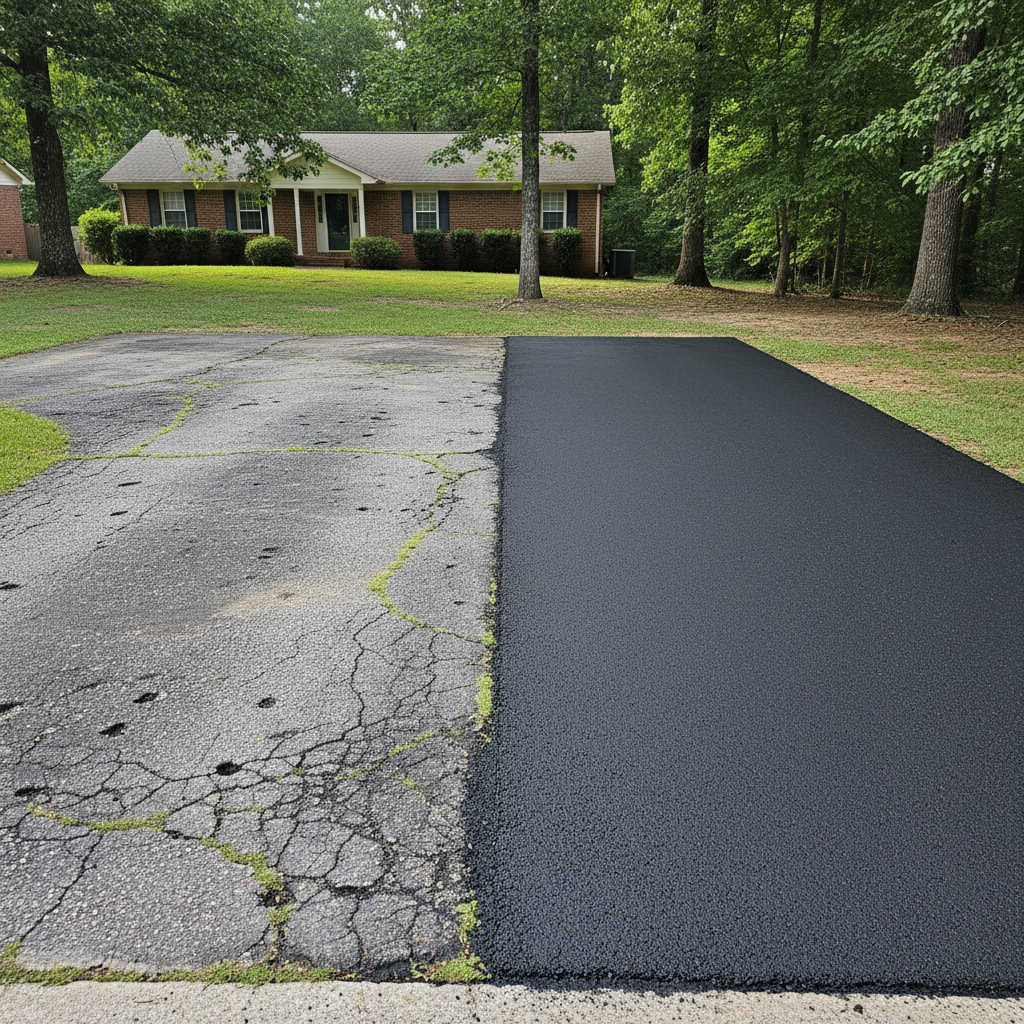
When you look at your driveway, whether it's just a fresh patch of dirt or an old, cracked mess, you've really got two main ways to get that smooth, black asphalt down. It's either building something brand new from the ground up, or fixing up and sprucing what's already there. I see folks wrestle with this choice all the time, especially with our Montgomery clay soils and those hot, humid summers we get.
New Construction: Starting with a Clean Slate
This one's pretty straightforward: maybe you've got a new house, a new addition, or you're just making your paved area bigger. Perhaps you're finally putting in that circular drive you've always wanted. With new construction, you're literally building the whole pavement structure from scratch. That means proper excavation, laying down a good, stable aggregate base—usually crushed stone—and then putting down the asphalt binder and surface layers.
Cost: Generally, new construction will be your priciest option right out of the gate. You're paying for all the earthwork, the base material, and multiple layers of asphalt. There's just more stuff and more people involved, you know?
Durability: When it's done right, new construction gives you the best long-term durability. You control every bit of the foundation, which is super important. A well-built new driveway can last 20-30 years or even more with good upkeep, especially if you've planned for decent drainage from day one. That's a must around here to keep water from messing up the base.
Maintenance: Initial maintenance mostly means sealcoating at the right time (usually 6-12 months after paving) and then every 2-3 years. You'll want to take care of any small cracks as they pop up, but you shouldn't see major issues for quite a while.
Appearance: It's brand new, so it looks fantastic—smooth, dark, and uniform. Plus, you get to design the exact shape and size you want.
Repairing Existing Asphalt: Patching, Resurfacing, and More
Now, if you've got an asphalt driveway that's seen better days, you're looking at repair options. This isn't just one thing, mind you; it can be anything from simply filling cracks to more extensive resurfacing work.
Crack Filling & Patching: For minor cracks and small potholes, we'll clean them out and fill them with hot rubberized sealant or a cold patch material. This is preventative maintenance, plain and simple, to stop water from getting into the base and causing bigger headaches. It's kind of like putting a band-aid on a small cut.
Asphalt Patching (Dig Out & Replace): For bigger, more serious potholes or areas with alligator cracking, we'll cut out the bad section. If the base underneath has failed, we'll dig that out too, replace it, and then lay down new asphalt. This is a much stronger repair than just a cold patch.
Resurfacing (Overlay): This happens when the existing asphalt is still solid underneath but has a lot of surface cracks, fading, or small dips. We'll clean and prep the old surface, fix any major low spots, and then put a new layer of asphalt right over the top. This is a great way to make a decent driveway last longer without the full cost of replacing it.
Comparing the Repair Options:
Cost: Repairs are usually cheaper than new construction. Crack filling is inexpensive, patching is moderate, and resurfacing costs more but is still typically less than a full tear-out and rebuild.
Durability: This really varies. Crack filling is temporary. Patches can last for years if done well, but they're only as good as the pavement around them. A good resurface might give you another 10-15 years, but it depends on how sound the original base is. If that base is shot, a resurface is just a band-aid on a broken leg, isn't it?
Maintenance: You'll still need regular sealcoating and crack filling to protect your investment, perhaps even more diligently since you're working with an older foundation.
Appearance: A good resurface can make an old driveway look almost new. Patches, while they work, will always show as distinct areas, and the overall uniformity won't be as perfect as a brand new construction.
My Recommendation for Montgomery Homeowners
Look, if you've got a brand new area you want paved, new construction is your only real option, and it's the best one for long-term value. You'll get a driveway built specifically for our climate and soil conditions, designed to last.
If your existing driveway is showing its age, the decision comes down to how bad the damage is and what your budget looks like. If it's mostly surface cracks and fading, and the base seems solid (no major sinking or widespread alligator cracking), a resurface can be an excellent, cost-effective solution to get many more years out of it. Quantum Asphalt Solutions does a lot of these, and they turn out great.
However, if you've got significant structural issues—large areas of alligator cracking, standing water, big potholes that keep coming back, or noticeable sinking—you're probably better off thinking about a full reconstruction, even if it costs more. Trying to patch or resurface a fundamentally failed base is like putting a new roof on a house with a crumbling foundation. It's a short-term fix that won't solve the real problem, and you'll just end up spending more down the road. Get a pro to look at it; we can tell pretty quickly if your base is still good or if it's time to start fresh.